What actually drives the cost of an interlock patio
Two patios the same size can price very differently, and the stone is rarely why. Here's what really moves the number — excavation, base, grade, access and layout — so you can read a patio quote properly.
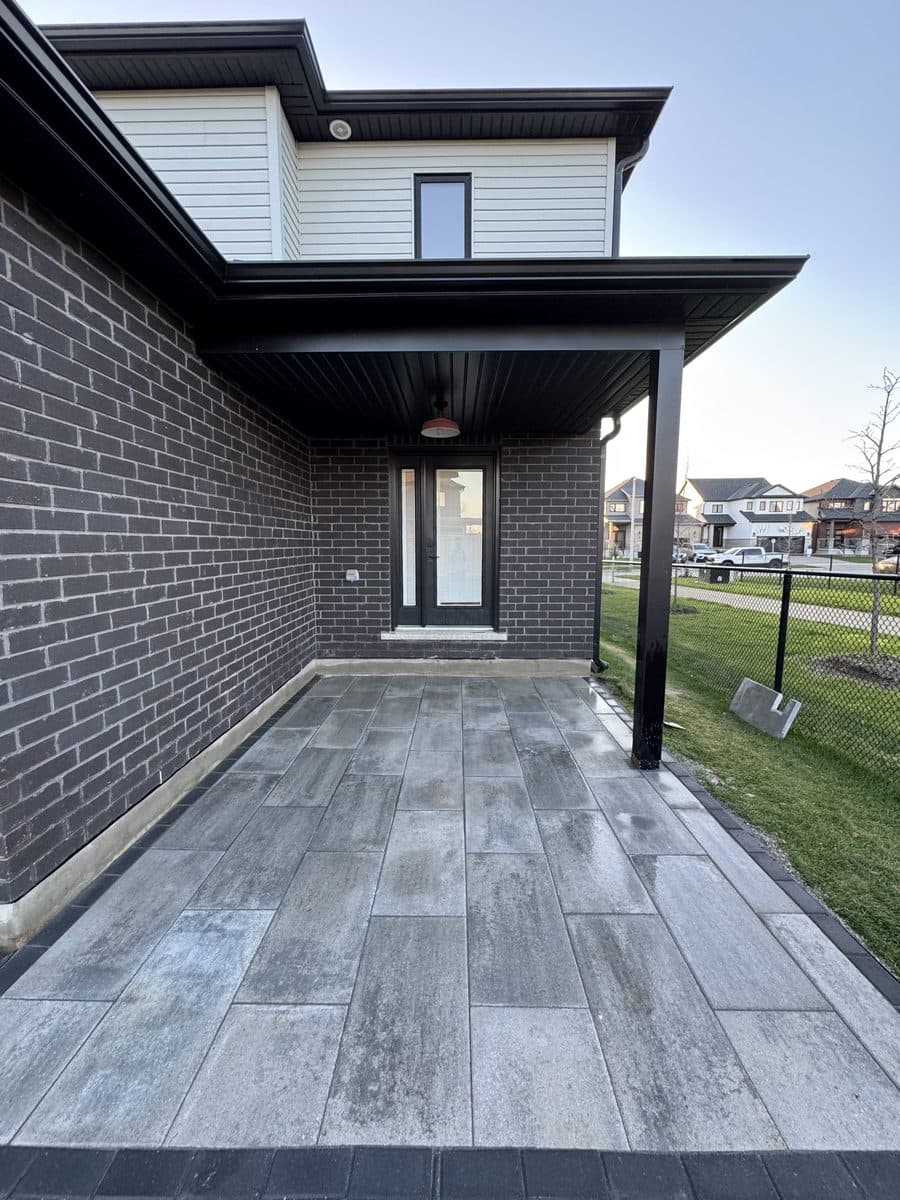
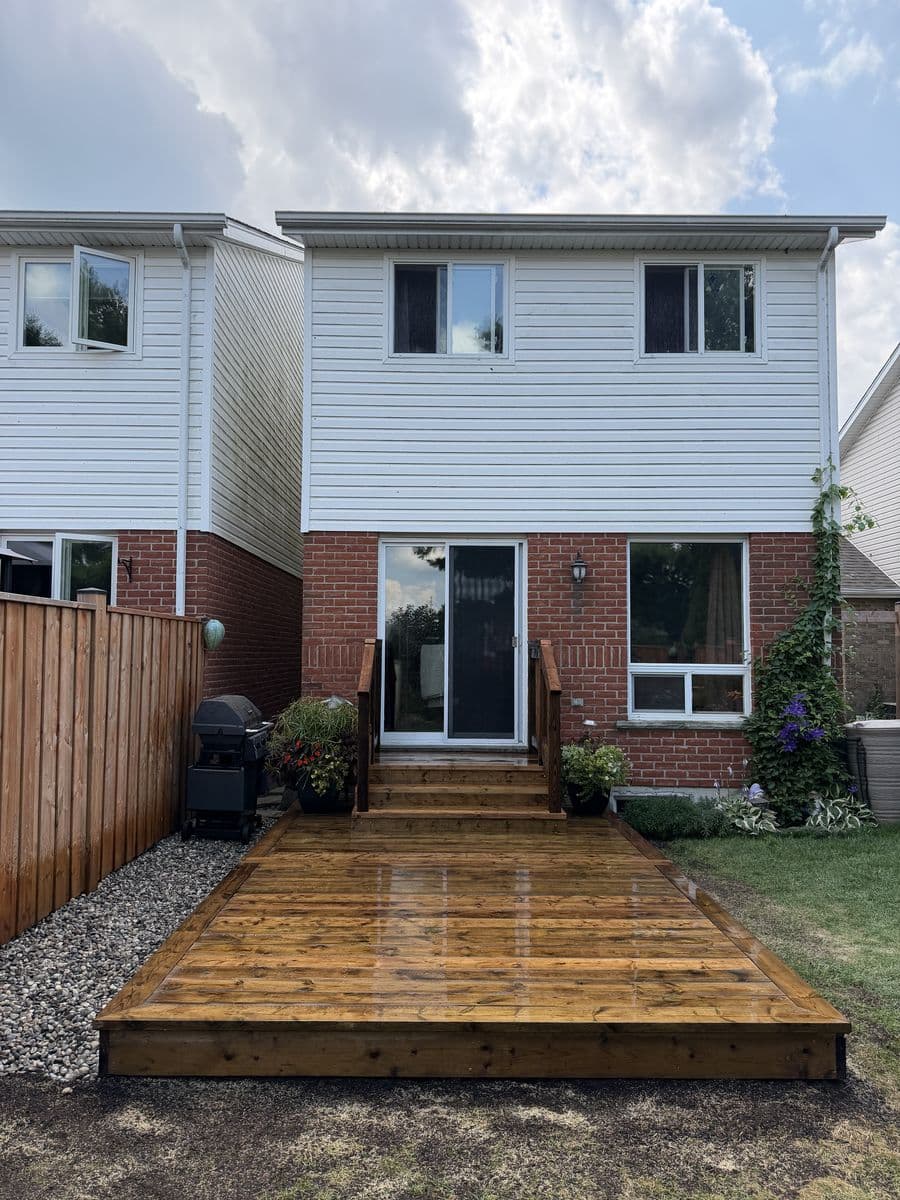
Most people shopping for a patio start with the pavers. They pick a colour and a texture, work out the square footage, and assume the price follows from those two things. It doesn't, really. On most of the patios we quote, the stone you walk on is a minority of the job.
We don't publish prices, because we have priced patios of identical size that landed far apart, and any number on a web page would have been wrong for both. What we can do is explain where the money actually goes — so a quote stops being a mystery, and you can tell whether two of them describe the same patio.
Most of the job is underground
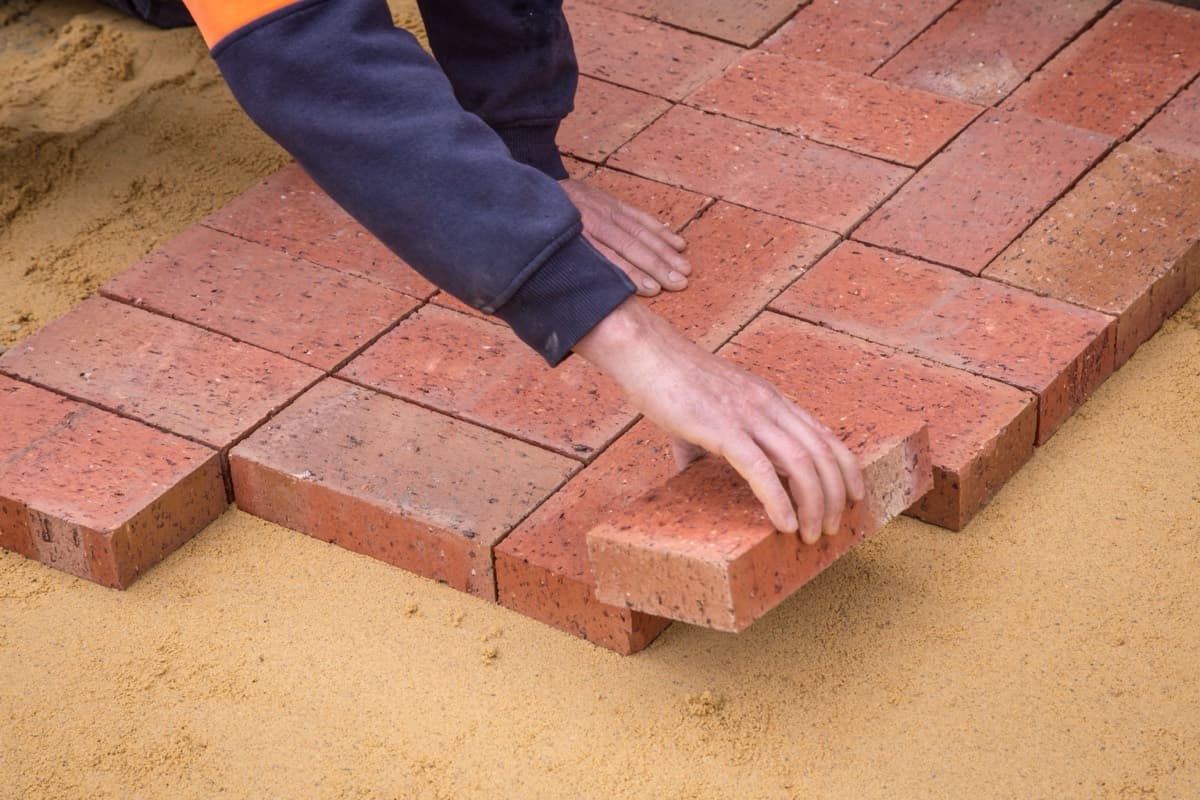
An interlock patio is a stack of layers: excavated native soil at the bottom, often a geotextile fabric, a compacted granular base built up in lifts, a thin screeded bedding layer, and only then the pavers. The layers you never see are the ones that decide whether the patio is still flat in fifteen years.
That base is also where most of the labour and material sit. Every centimetre of depth is soil that has to be dug out and hauled away, and crushed stone that has to be trucked in, spread and compacted. A patio built on a proper base and one built on a skim of gravel can look identical on the day they're finished. The difference shows up after a few Ontario winters, when the shallow one starts to heave, dip and rock underfoot.
If one quote is noticeably cheaper than the others, base depth is the first thing to ask about. It is the easiest corner to cut and the one you will never see being cut.
Soil and frost: why clay costs more
Around Fergus, Elora and much of Wellington County, what's under the topsoil is often heavy clay. Clay holds water, drains slowly, and expands when that water freezes. That is exactly the movement a patio base exists to resist.
On clay, a responsible install usually means digging deeper, laying fabric so the base stone doesn't slowly sink into the soft subgrade, and paying closer attention to where water goes. Sandier, free-draining ground can get away with less. You can't know which you have by looking at the lawn, which is one reason a patio can't be honestly priced from a phone call or a satellite photo.
What has to come out first
Bare ground is the cheapest starting point. Everything already sitting where the patio will go adds cost, because it has to be removed and disposed of before any digging starts — and disposal is charged by weight.
- An old concrete pad or walkway: has to be broken up and hauled. Concrete is heavy, and disposal reflects it.
- An existing patio or deck: lifting old pavers or tearing down framing is its own day of work before the new job begins.
- Lawn and topsoil: stripped and removed across the whole footprint, plus a margin around the edges.
- Excavated clay: bulks up once it's dug, so the volume leaving the site is larger than the hole it came from.
- Roots and stumps: large roots near the surface can change how deep you can dig, or where the patio can realistically go.
Grade: flat yards are the exception
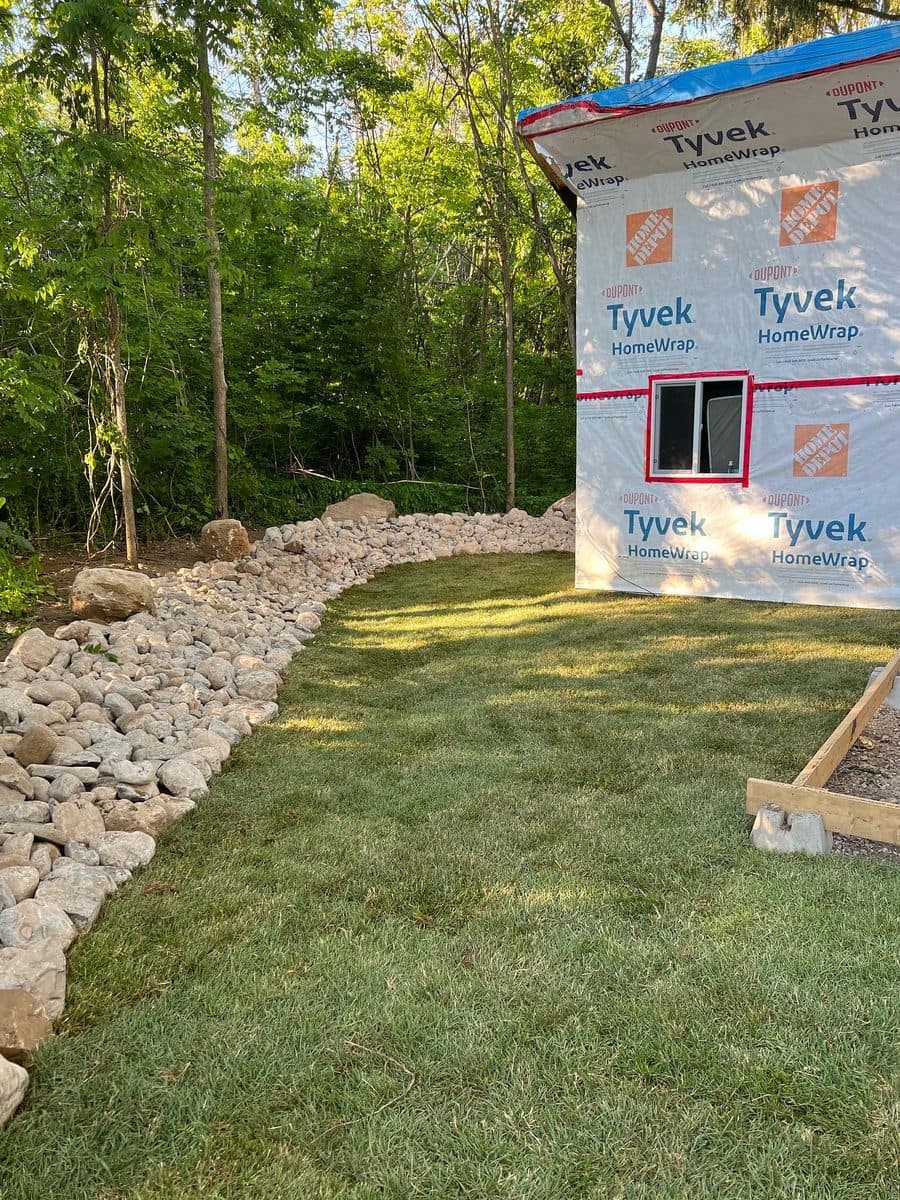
A patio has to be close to level for use but still pitched slightly so water runs away from the house, never toward it. On a flat, well-drained yard that is simple. On a sloped yard it means cutting into one side, building up the other, or both.
Once the change in height gets past a certain point, the patio stops being a flat surface and starts needing steps, a retaining wall, or a raised section with a wall face around it. Those are structural pieces with their own base, drainage and material. On many properties, grade is the single biggest reason one patio costs more than another of the same size.
Downspouts matter here too. A patio built across the path a downspout used to drain into needs that water redirected — sometimes a simple extension, sometimes buried pipe to daylight or a drain. It's far cheaper to plan that in than to fix it after the first spring melt.
Access for machines and material
A patio uses tonnes of crushed stone, a pallet or more of pavers, and it sends out a similar weight of soil. If a skid steer or mini excavator can reach the back yard from the driveway, all of that moves quickly.
If the only route is a narrow side gate, a set of stairs, or across a finished lawn nobody wants rutted, much more of it moves by hand and wheelbarrow. On an otherwise identical patio, that can change the labour more than any other single factor. Ground protection mats over a lawn or driveway are sometimes worth it, and they are a real line item.
The paver itself, and how it's laid
Paver choice does move the price — just usually less than people expect compared with everything above. The differences worth knowing about:
- Format: large slab-style pavers look clean and modern but are less forgiving. They need a flatter bedding layer and more careful handling, which adds labour.
- Pattern: a simple running bond has fewer cuts than a herringbone or a multi-size random pattern, and every cut is time and waste.
- Shape: curves, rounded corners and angled edges all mean cutting along the perimeter. A rectangle is always the most economical shape.
- Borders and inlays: a contrasting border or a soldier course looks sharp, and adds a second material and another row of cuts.
- Edge restraint and joint sand: proper edging and polymeric sand are what hold the surface together. They're not optional extras, but check that they're in the quote.
Add-ons that change the scope
Seat walls, a fire pit, built-in steps, low-voltage lighting and permeable pavers in place of standard interlock are all things we build regularly. Each one is worth pricing as its own item, so you can decide what earns its place rather than seeing only a single total. Lighting in particular is much easier to run before the pavers go down than after.
Reading two quotes properly
If two patio quotes are far apart, these questions explain the gap almost every time:
- How deep is the excavation, and how deep is the compacted granular base?
- Is geotextile fabric included under the base?
- Is the base compacted in lifts, or placed in one go and compacted once at the end?
- Where will water go — what slope is the patio built to, and what happens to nearby downspouts?
- Is removal and disposal of the old surface, sod and soil included, or billed after?
- What edge restraint is used, and is polymeric sand included?
- Which exact paver, and in what pattern?
- What does the warranty cover, and for how long?
Why fall is a good time to plan one
Interlock can be built well into the fall, right up until the ground freezes, and the cooler weather is easier on everyone. But the bigger advantage of right now is planning. A patio designed and priced over the winter goes on the schedule early for spring, instead of competing with everyone else who decides in May.
It also means you see the yard as it really behaves: where water sits after a fall rain, where the afternoon sun actually lands, and how the grade looks with the leaves down.
Getting a real number
The only honest way to price a patio is to stand where it's going. We check the grade, look at where the water drains, see what the soil is actually made of, and measure the access route before quoting anything.
That visit is free across Fergus, Elora, Centre Wellington, Guelph, Kitchener, Cambridge and Milton, with no obligation. Even if you go with someone else, you'll know exactly what to ask them.