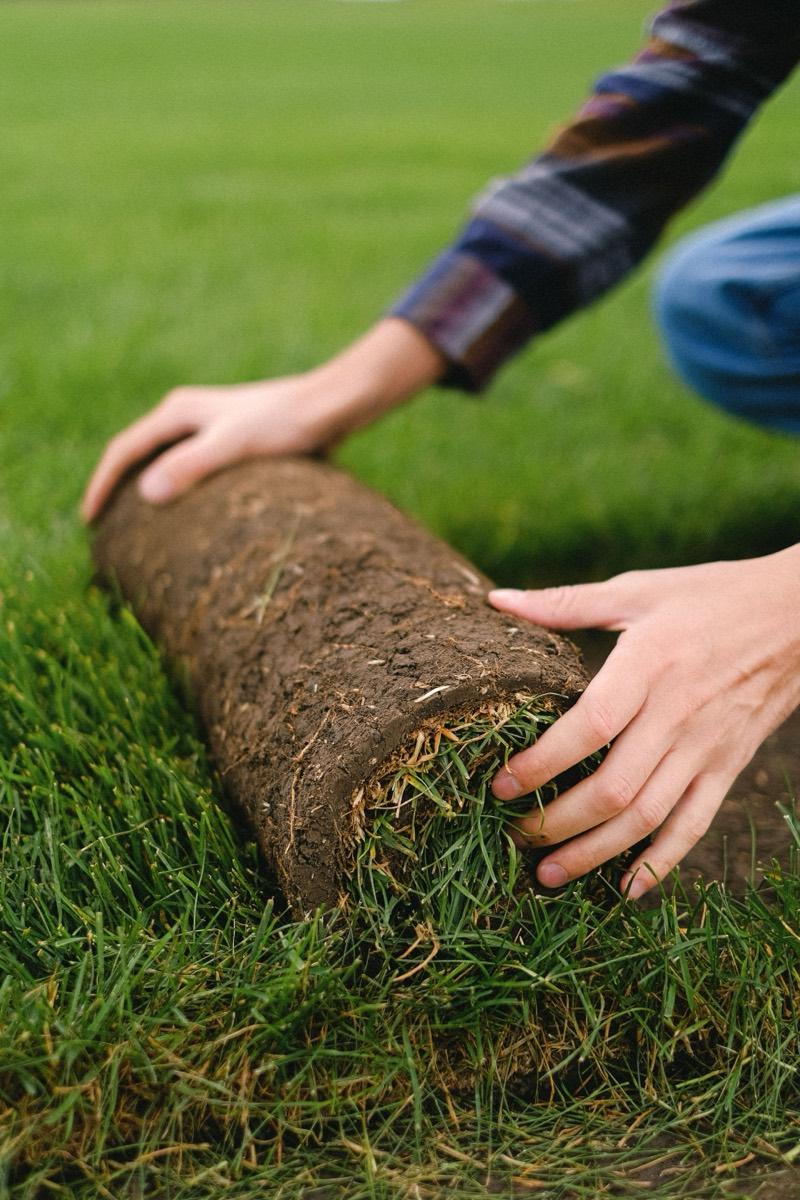
Aeration and overseeding: the late-September window
The cheapest fix for a thin, compacted lawn happens in a window that is open right now and closes fast. What core aeration actually does, why clay makes it necessary here, and the order the steps have to happen in.
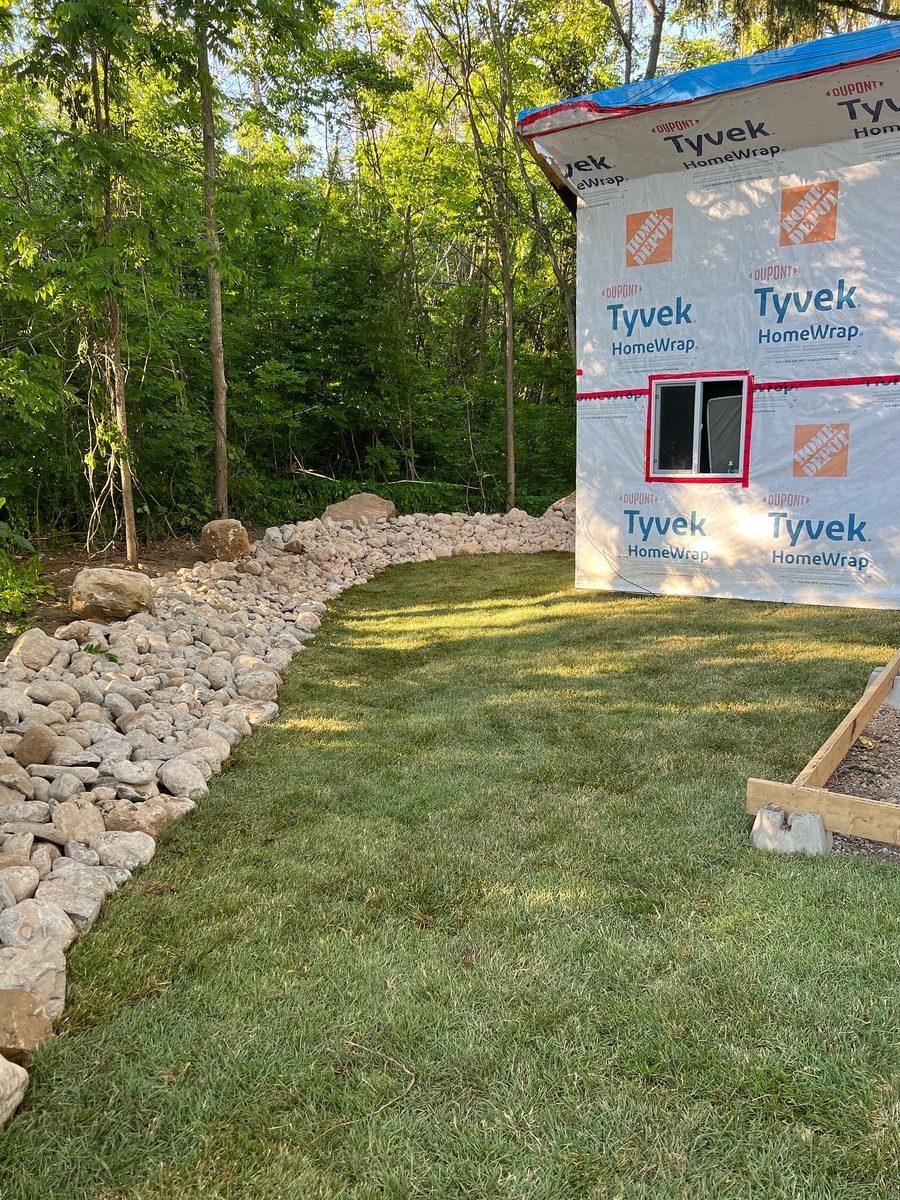
If a lawn went into this summer thin and came out of it thinner, the fix is almost never more fertiliser. It is usually air, seed and timing — and the window for all three is open right now.
Aeration and overseeding is the least glamorous thing we do and, on the right lawn, the best value by a wide margin. It is also the job people most reliably do in the wrong order, at the wrong time of year, and then conclude does not work.
Why fall, and why this particular window
Grass seed germinates on soil temperature, not air temperature. In late September the soil here is still carrying summer warmth while the air has cooled and the rain has come back. That combination — warm ground, cool air, reliable moisture — is the best germinating condition this region gets all year, and it is better than anything spring offers.
Spring looks tempting and is worse. The soil is cold well into May, weed seed germinates alongside your grass seed and usually beats it, and any new seedling that does establish has eight weeks to build a root system before July hits it. Fall seedlings get the whole autumn to root, go dormant, and come back in spring already established.
The constraint is the far end. New seedlings need roughly four to six weeks of active growth before the ground stops working — enough to germinate, tiller, and put down roots that can hold through freeze-thaw. In Centre Wellington that means seed going down in the back half of September is comfortable, the first week or two of October is workable, and anything after mid-October is a gamble you are taking knowingly. Seed that germinates and then freezes as a single fragile blade will not be there in April.
What core aeration actually does
Core aeration pulls thousands of small plugs of soil out of the lawn and drops them on the surface. It is not spiking, and the difference matters: spikes press soil sideways and make compaction slightly worse, while cores physically remove soil and leave a void.
Those voids do three things at once. They let air and water reach the root zone instead of sheeting off a hard surface. They give roots somewhere to expand into, which is how a lawn gets deeper rather than just greener. And they create thousands of protected pockets of open soil that are, as it happens, the ideal place for grass seed to land.
That last point is why the two jobs belong together. Seed broadcast over an un-aerated lawn mostly sits on top of thatch and dries out or gets eaten. Seed broadcast over a freshly cored lawn falls into the holes and gets the soil contact it needs. Same bag of seed, completely different result.
Clay is the local variable
Much of Wellington County sits on heavy clay, and clay compacts in a way sandier soils do not. Add the normal life of a residential lawn — foot traffic, a dog's regular route, a trampoline, kids, and in newer subdivisions the machinery that built the house — and you end up with a layer near the surface dense enough that roots genuinely cannot get through it.
You can usually diagnose it without tools. Push a screwdriver into the lawn the day after decent rain. If it slides in easily, compaction is not your problem. If you have to lean on it, that is what is limiting the lawn, and no amount of feeding will change it.
The other tell is water behaviour. A lawn that puddles in a light rain, or one where water runs off toward the driveway instead of soaking in, is telling you the surface has sealed. That is a compaction symptom, and it is also how an ordinary clay lawn slowly turns into a drainage problem.
The order the steps go in
Sequence is most of the job. Done out of order, each step undoes the one before it.
- Mow shorter than usual and bag the clippings. Seed has to reach soil, and long grass intercepts it. This is the one time of year to cut low deliberately.
- Clear the leaves first. Aerating and seeding into a leaf layer wastes both. If the maples have started, rake before you start rather than after.
- Water the day before if the ground is dry. A core aerator barely penetrates hard dry clay and pulls short, crumbly plugs. Slightly moist soil gives you full-depth cores.
- Aerate in two passes at right angles. One pass leaves the holes too far apart to matter on compacted ground.
- Leave the cores on the lawn. They look untidy for about two weeks and then break down into the surface, which is exactly where you want that soil. Raking them off throws away half the benefit.
- Overseed immediately after aerating, while the holes are still open. A day or two of drying and they close over.
- Top-dress with a thin layer of quality compost or screened topsoil if the lawn is genuinely poor. Thin means thin — you are filling holes and holding moisture, not burying grass.
- Water lightly and often until germination, then taper. This is the step that decides whether any of the rest mattered.
Watering is the part that decides it
Overseeding fails more often from watering than from anything else, and it fails in a specific way: people water it like an established lawn. A deep soak every few days is right for mature grass and wrong for seed. A germinating seed sits in the top centimetre of soil with no root system at all, and if that centimetre dries out once during germination, the seed is dead. There is no partial credit.
For the first couple of weeks the goal is a surface that never fully dries — short, frequent watering, often twice a day in warm weather, enough to darken the soil without puddling. Fall does a lot of this for you, which is another reason the season works, but a dry stretch in early October will still kill a new seeding if you are not paying attention.
Once seedlings are up and you have mown them once or twice, switch over: less often, longer, deeper. That is what pulls roots downward heading into winter.
Expect different grasses to appear at different times. Perennial ryegrass typically shows within about a week; Kentucky bluegrass commonly takes two to three. A patchy-looking lawn at day ten is normal, not a failure, and pulling the plug on watering at that point is how a good seeding gets lost.
What goes wrong
The failures repeat, and they are avoidable.
- Seeding without aerating. On compacted clay this is close to throwing seed on a sidewalk. Germination is poor and uneven, and it reads as bad seed when it was bad contact.
- Applying a weed-and-feed or crabgrass preventer at the same time. Pre-emergent herbicide does not distinguish between weed seed and grass seed — it stops both. If you want to overseed, the pre-emergent has to be off the table for the season.
- Buying the cheapest seed available. Discount mixes carry filler, annual species that die over winter, and weed seed. The seed is the smallest cost in the job and the one place skimping shows up most clearly.
- Starting too late and hoping. Mid-October seed sometimes takes. It also sometimes germinates just enough to die in the first hard frost, and you buy the same bag again in spring.
- Walking on it. New seedlings are fragile for weeks. Keep the dog and the wheelbarrow off it until after the second mow.
- Letting the leaves cover it. A seeded lawn smothered under a wet leaf mat in October will not be there in spring. Blow or rake gently — do not rake hard over new seedlings.
When aeration and seed will not fix it
Honest answer: overseeding works on a lawn that is thin, not on a lawn that is gone. If there is still a reasonable base of healthy grass and the bare patches are scattered, aeration and seed will close it up over a season or two, and at a fraction of the cost of anything else.
If the lawn is more bare than grass, if it sits on construction fill with almost no topsoil over it, or if the grade sends water across it every time it rains, then seed is money spent on a surface that cannot hold it. Those lawns need the underlying problem addressed first — topsoil, grading, or drainage — and usually sod once it is corrected.
The same applies to a lawn that struggles every single summer no matter what gets done to it. That pattern is almost always depth: not enough soil, or soil too dense to root into. Aeration helps, but it is a maintenance tool, not a rebuild.
If you want it done this season
We aerate and overseed across Fergus, Elora, Centre Wellington and Guelph, and it is one of the few jobs where the calendar genuinely dictates the outcome rather than the crew. The window narrows every week from here.
If you are not sure whether your lawn is a candidate for overseeding or past it, that is a five-minute answer on site, and worth getting before spending on seed. Get in touch for a free estimate — and if it turns out the lawn needs grading or drainage sorted first, we will tell you that rather than seed over it.