Interlock patio maintenance: keeping pavers looking new for decades
A well-built interlock patio can last 30+ years — but a little upkeep keeps it flat, weed-free, and rich in colour. Here's the simple maintenance routine we recommend.
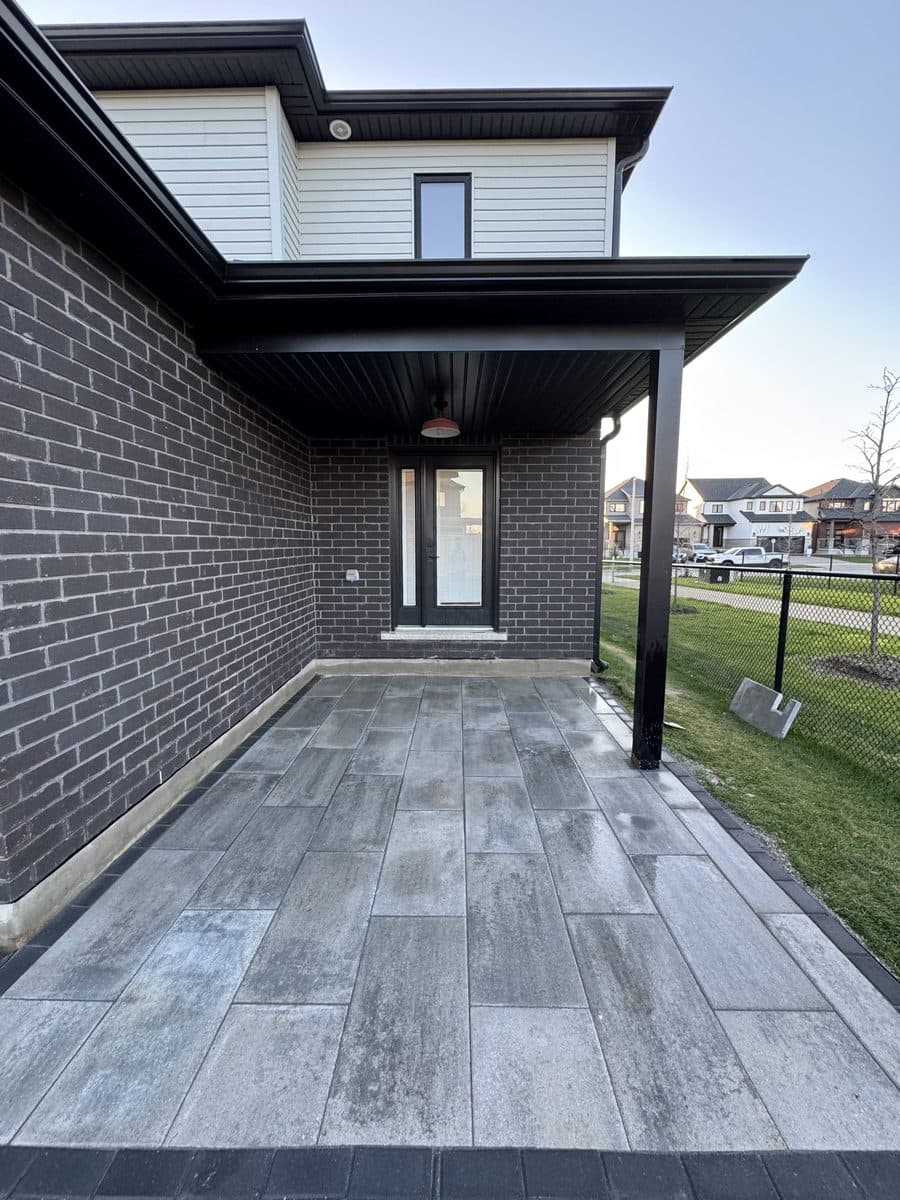
One of the best things about interlock is how little it asks of you. A patio or walkway built on a proper compacted base can stay flat and solid for decades — and unlike a poured concrete slab, individual pavers can be lifted and re-set if they ever need it. But "low maintenance" isn't "no maintenance," and a few simple habits are the difference between a patio that looks new in year fifteen and one that looks tired by year five.
Sweep and rinse — the basics that matter
Most interlock care is just keeping organic debris off the surface. Leaves, grass clippings, and dirt that sit in the joints break down into the exact soil that weed seeds want to grow in. A periodic sweep and an occasional rinse with the hose keeps joints clean and denies weeds a foothold before they ever start.
For general grime, a bucket of warm water with a little mild dish soap and a stiff-bristled broom handles most stains. Save the pressure washer for problem spots and keep it on a low setting — blasting the joints strips out the sand that locks the pavers together.
Polymeric sand: the joints do the work
The sand between your pavers isn't just filler — polymeric sand hardens to bind the pavers into one interlocking surface, block weeds, and keep ants and washout at bay. Over years, some of it naturally works its way out, and you'll notice joints looking low or a paver starting to feel slightly loose.
Topping up polymeric sand every few years is the single most valuable thing you can do for an interlock surface. It's straightforward — sweep fresh sand into the joints, then activate it per the product directions — and it keeps the whole patio behaving like the solid, connected surface it was built to be.
 BeforeAfter
To seal or not to seal
Sealing is optional, and it's mostly about looks and stain resistance rather than structural need. A sealer deepens and enriches the colour of the pavers (the "wet look" many homeowners like), helps stabilize the joint sand, and makes spills — barbecue grease, spilled wine, tree sap — easier to clean up before they stain.
If you seal, plan on redoing it every few years, and always start with clean, fully dry pavers and fresh joint sand. Sealing over dirt or damp stone traps the problem underneath. If you prefer the natural matte look of the stone, skipping sealer is perfectly fine — plenty of our patios are never sealed and hold up beautifully.
Staying ahead of weeds and moss
Any weeds you do see in interlock almost always grew from seeds that blew in and germinated in surface debris — not from underneath a properly built patio. Pull them early, before they seed, and keep the joints topped up with polymeric sand to shut the door on the next round. For moss in shady, damp corners, improving airflow and sunlight helps, and a gentle cleaning lifts it without harsh chemicals.
Winter care in Southern Ontario
Interlock handles our winters well — that flexibility is exactly why we favour it over concrete here. You can shovel it like any surface; a plastic-edged shovel is kinder to the paver surface than a metal one. For ice, standard sodium chloride (rock salt) can be hard on some pavers and joint sand over time, so many homeowners prefer a paver-safe de-icer or plain sand for traction. When in doubt, check the paver manufacturer's guidance.
When to call us instead
If a section has actually settled, heaved, or a paver has cracked, that's a lift-and-reset job rather than routine upkeep — and it's one of interlock's real advantages, because we can repair the affected area without tearing out the whole patio. Persistent settling usually points to a base or drainage issue underneath, which is worth diagnosing properly.
Thinking about a new patio or walkway in Fergus, Elora, or the surrounding area — or want an existing one assessed? Reach out for a free on-site estimate and we'll give you an honest read on it.