What actually drives the cost of a sod installation
Two yards the same size can price very differently. Here's what genuinely moves the number — access, prep, grading, disposal — so you can read a quote properly and compare like for like.
The first question almost everyone asks is what sod costs per square foot. It is a reasonable question and a genuinely misleading one, because square footage is rarely what separates two quotes on the same street.
We don't publish prices, for a reason that isn't evasive: we have quoted yards of identical size that landed thousands apart, and a number on a web page would have been wrong for both. What we can do is explain exactly what moves it, so a quote stops being a mystery and you can tell whether two of them are even describing the same job.
Access is usually the biggest single factor
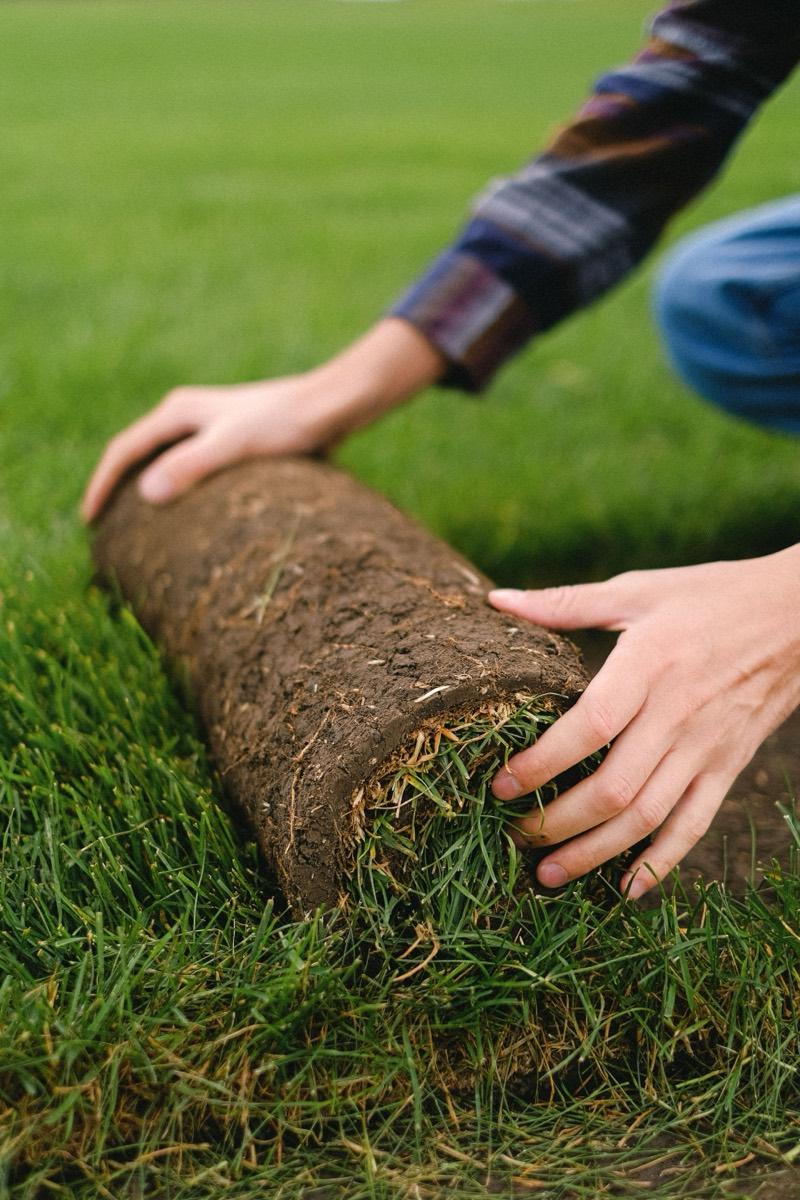
This surprises people more than anything else on the list. Sod is heavy — a single roll runs 15 to 18 kg, and an average yard takes hundreds of them. So does the topsoil, and so does everything coming out.
If a skid steer can get from the driveway to the back yard, material moves in minutes. If the only route is a 90 cm gate, or there are stairs, or a retaining wall, or a finished patio nobody wants tracked over, then every roll and every bucket of soil moves by wheelbarrow and by hand.
That single difference can double the labour on an otherwise identical yard. It is also why a quote given over the phone from a square-footage number is close to meaningless — nobody can see your gate from a phone call.
What is already on the ground
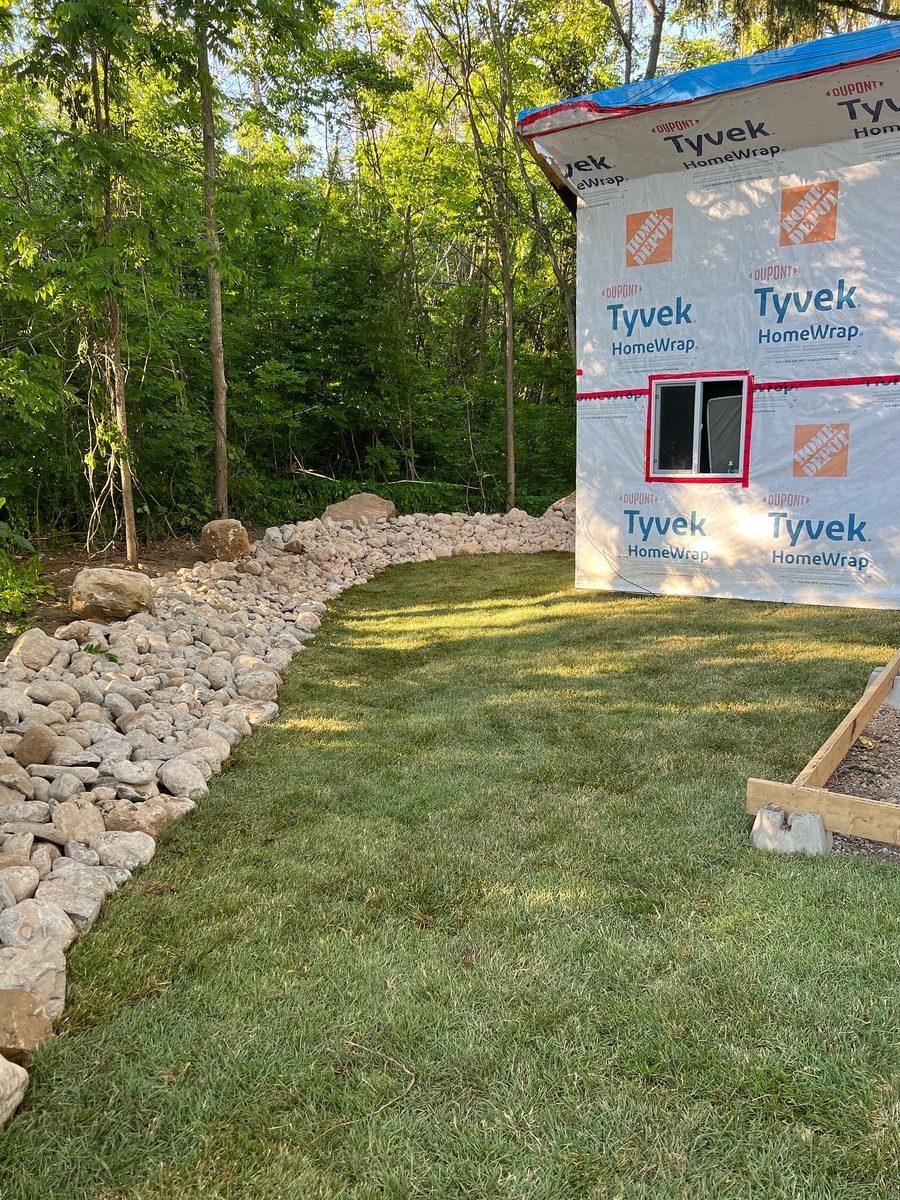
Bare, freshly graded soil on a new build is the cheapest starting point there is. Everything else costs more because it has to leave first.
- Existing lawn: has to be stripped and hauled. Laying fresh sod over old turf is a shortcut that fails — the old layer decomposes, the grade drops unevenly, and the new roots never reach real soil.
- Construction leftovers: brick ends, mortar, chunks of concrete and buried offcuts are common on builds two or three years old, and all of it has to come out before anything is graded.
- Compaction: heavy machinery during construction can leave soil dense enough that roots simply cannot penetrate it. That needs mechanical breaking up, not just a rake over the top.
- Tree roots and stumps: surface roots limit how much you can cut and fill, and sometimes change what is realistic for the whole area.
Grading — the part that is invisible and matters most
Grading is where the real difference between a cheap quote and a good one usually hides, because it is the one part you cannot see once the lawn is green.
The ground has to fall away from the house. If it doesn't, you have a basement problem waiting for the first heavy spring melt, and a lawn that drowns in the low spots every year. Correcting a bad grade means moving soil — sometimes a few wheelbarrows, sometimes truckloads.
If a quote is markedly cheaper than the others, grading is the first place to look. "Level it out and lay sod" and "re-establish fall away from the foundation" are different jobs at different prices, and they read almost the same on paper.
Topsoil depth
Sod needs real soil to root into — not the thin scrape of fill a builder leaves behind. Where that is missing, it has to be brought in and spread, and topsoil is priced by volume.
This is the most common place for two quotes to diverge without either being dishonest. One may assume the existing soil is adequate; the other may have priced 100 mm of imported screened topsoil across the whole area. Ask which, because the lawn's survival depends on the answer far more than on the brand of sod.
Shape, obstacles and disposal
A clean rectangle installs faster than the same area broken up by garden beds, a play structure, a shed, and a curved walkway. Every edge is a cut, and every cut is labour and waste.
Disposal is a real line item too. Stripped turf, old soil and construction debris go somewhere, and that somewhere charges by weight.
Reading two quotes properly
If you have numbers in front of you that are far apart, these are the questions that explain the gap almost every time.
- Does it include stripping and hauling away the existing lawn, or is that assumed done?
- How much topsoil is being brought in, and is it screened?
- Does it include grading for drainage away from the house, or only levelling?
- Is disposal in the price, or billed after?
- Is the sod fresh-cut for your install date, or sitting on a pallet from earlier in the week?
- Who waters it, and for how long — and what does the warranty actually require of you?
Getting a real number
The only honest way to price a lawn is to stand in it. We walk the yard, check the fall, look at what the soil is actually made of, and measure the access route before quoting anything.
That visit is free across Fergus, Elora, Centre Wellington, Guelph, Kitchener, Cambridge and Milton, and it comes with no obligation. Even if you go elsewhere, you'll know what questions to ask.