How late can you lay sod in Ontario?
Later than most people think. Sod goes down until the ground freezes or the farms stop cutting — often into November, occasionally December. Here's how we judge the cutoff.
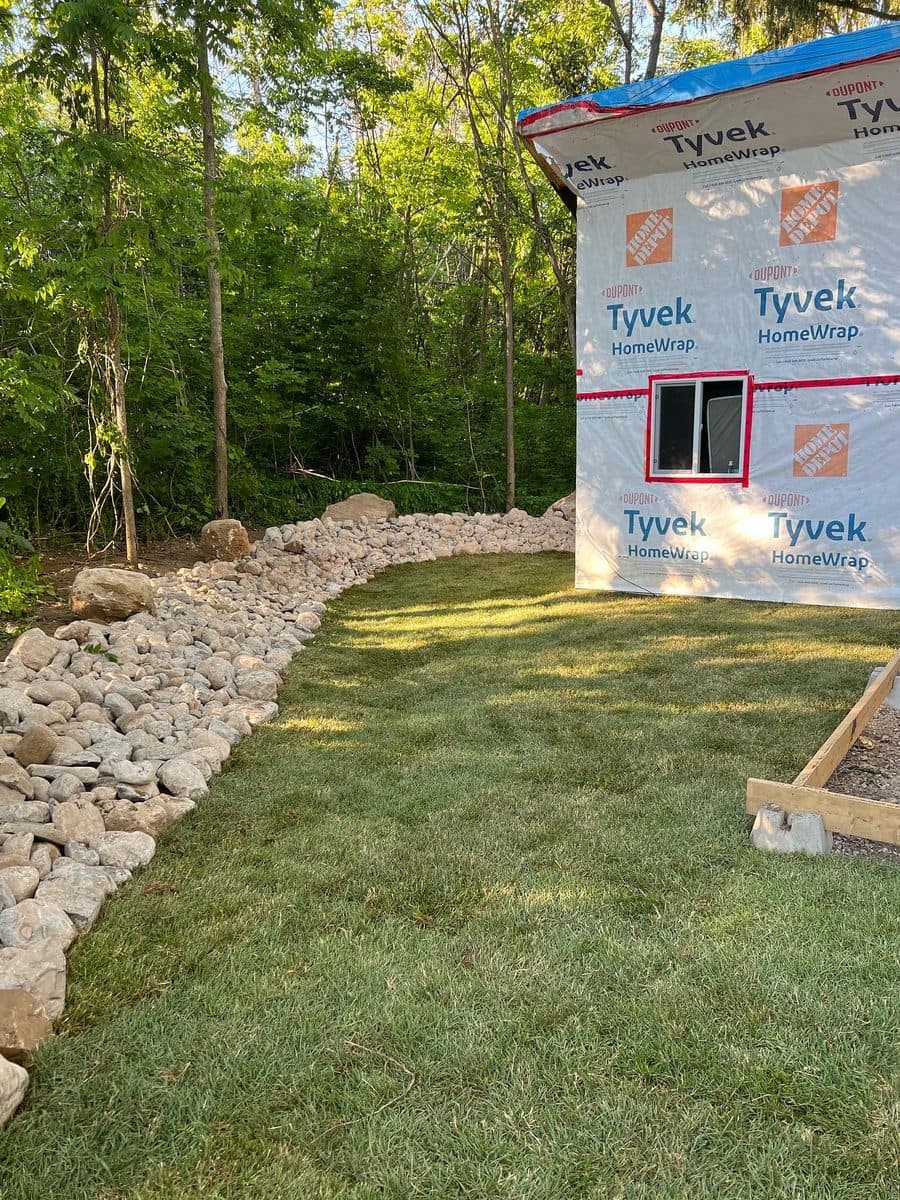
Short answer: in Southern Ontario you can usually lay sod until the ground freezes hard enough that you can't work it — which most years means somewhere in November, and in a mild year can stretch into early December. The real cutoff isn't a date on the calendar. It's two things: whether the ground is still workable, and whether the sod farms are still cutting.
This surprises people. Most homeowners assume the season ends with Labour Day, book nothing, and end up staring at a mud patch until May. That's usually an unnecessary wait.
The two things that actually end sod season
Everything else is secondary to these.
- The ground freezing. Sod needs contact with soil it can root into. Once the top few inches are frozen solid, you can't grade or prepare a base properly, and the roots have nothing to knit into.
- The farms stopping. Sod is a harvested crop. When the farms stop cutting for the season — usually because their fields have frozen or gone dormant — there's no fresh sod to buy, regardless of what your yard looks like.
Sod farms often cut later than you'd expect
This is the part most homeowners have no way of knowing. Ontario sod farms will keep harvesting as long as their fields are workable and there's demand. In a normal year that runs well into November. In a mild fall we've seen fresh sod available into December.
It's also worth knowing that late-season sod is often excellent quality. It's grown through a full season, it's been through cool nights that thicken the blade, and it isn't stressed by summer heat the way July sod is.
The practical implication: if you want sod in late fall, the question to ask isn't “is it too late?” It's “are the farms still cutting, and is my ground still workable?” Those are questions we can answer with a phone call in about a minute.
What happens to sod laid in late fall
Late-season sod behaves differently from spring or early-fall sod, and knowing this ahead of time prevents a lot of unnecessary worry.
It roots more slowly, because root growth slows as soil temperatures drop. It may go dormant — losing colour and looking brown or straw-like — before it's fully knitted in. That's normal and it isn't dead. Dormant sod is doing exactly what an established lawn does every winter.
What matters is soil contact. As long as the sod is laid tight on properly prepared soil and watered in before the freeze, it will settle over winter and green up in spring, often faster and thicker than a lawn laid the following May.
Watering late-season sod
The watering rules change in cold weather, and following the summer schedule can do harm.
- Water it in thoroughly at installation. This is not optional at any time of year.
- Keep watering while the ground is unfrozen and the sod is still growing — but far less often than in summer. Cool soil holds moisture, and the sod isn't losing much to evaporation.
- Stop once the ground freezes. There's nothing for the water to do, and it can ice over the crown.
- Don't panic when it browns off. Dormancy is the plant conserving energy, not failing.
- Resume normal watering in spring as it greens up.
When we'd tell you to wait
We turn down late-season sod jobs sometimes, and it's worth being upfront about when.
If the grade needs significant reworking and the ground is already partly frozen, we can't prepare the base properly — and base preparation is what determines whether a lawn lasts. Laying sod over a bad base to hit a deadline is how you end up redoing it.
If the site has an unresolved drainage problem, sod laid over it will sit in water through the spring thaw and struggle. Fixing the drainage first is the right order of operations, even if it pushes the lawn to spring.
And if a hard freeze is already locked in for the week, we'd rather book you first thing in spring than take your money for something that won't get the contact it needs.
Why late fall is a good time to book
There's a practical advantage that has nothing to do with agronomy: our schedule opens up. Most contractors are winding down, so lead times shorten. If you've been waiting weeks for a quote all summer, late season is when that changes.
You also get a lawn that's ready in April instead of one that's still being installed in May while everyone else's is already established.
The honest bottom line
If it's October or November and you're wondering whether you've missed the window — you probably haven't. Call and ask. The answer depends on this week's ground conditions and what the farms are cutting, and both change year to year.
We install sod across Fergus, Elora, Centre Wellington and Guelph, and we'll tell you honestly if it's too late. If it is, we'll book you for spring instead of selling you a lawn that won't take.