Fix drainage before winter, not after
Freeze-thaw turns a minor water problem into a structural one. Why autumn is the last sensible window to fix grading and drainage in Southern Ontario.
Drainage problems are easy to live with in summer. The yard puddles after a storm, it dries out in a day, and you forget about it. Winter is what turns that from an annoyance into a repair bill.
The mechanism is freeze-thaw. Water that sits in soil expands roughly nine percent when it freezes, and Southern Ontario gives us dozens of freeze-thaw cycles between November and April. Each one lifts whatever sits above it and drops it back slightly out of place.
What that actually damages
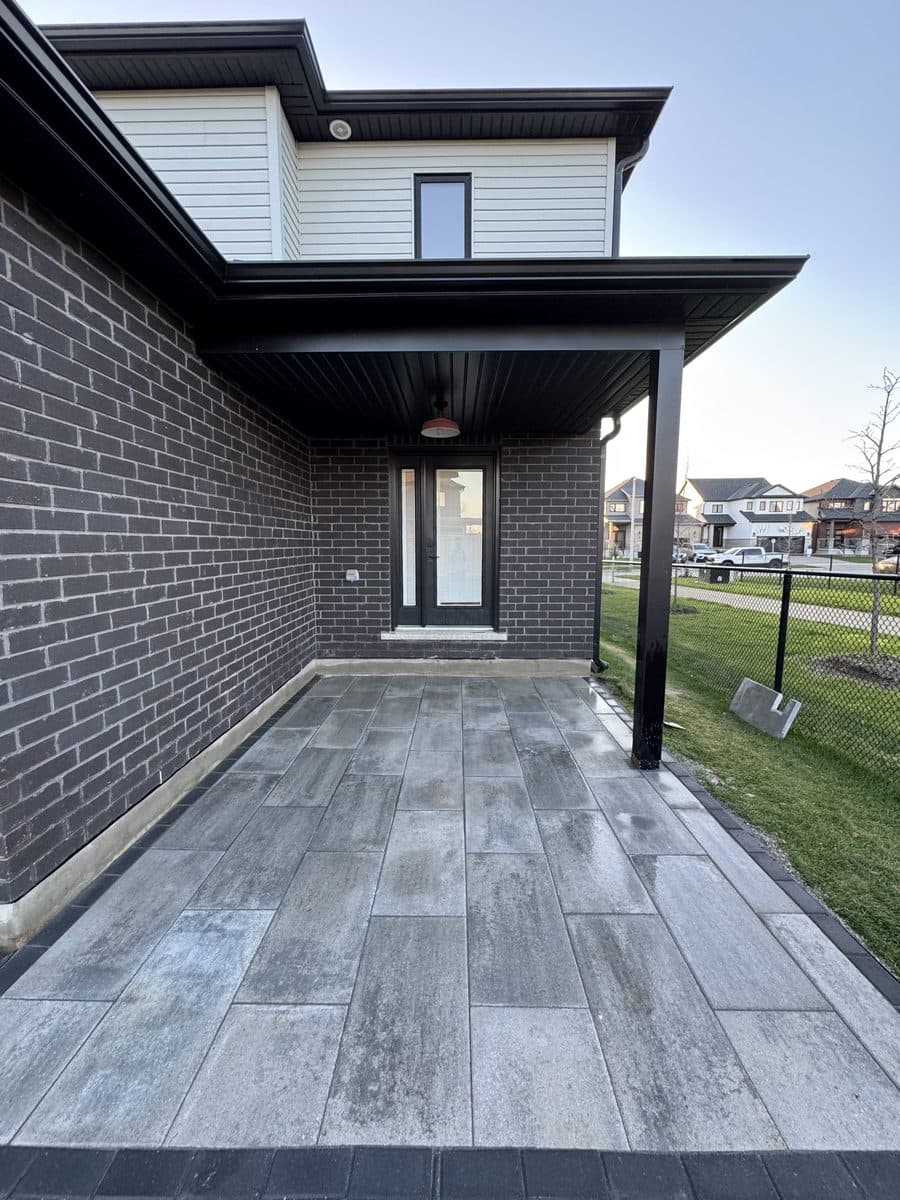
- Interlock and patios — pavers heave and settle unevenly, opening joints and creating trip edges that don't go back down on their own.
- Deck and fence footings — posts set in saturated ground get lifted a little each cycle. This is the most common cause of a fence that starts leaning after a few winters.
- Foundations — water pooling against the house and freezing puts lateral pressure on the wall, and repeated cycles find every existing weakness.
- Lawns — grass under standing water that freezes suffers crown hydration damage and dies in patches, which is why some lawns come out of winter with bare areas.
- Driveways and walkways — the same heaving that lifts pavers cracks slabs.
Why autumn is the last practical window
Drainage work means moving soil. Once the ground freezes you can't grade, you can't dig a trench cleanly, and you can't compact backfill properly. Work done in frozen ground settles wrong when it thaws.
Spring isn't a good substitute either, for a reason that catches people out: the ground is saturated from snowmelt. Trenching a swampy yard is slow, messy, and you often can't get equipment onto it without leaving ruts you then have to repair.
Autumn hits the window where the ground is workable, relatively dry, and there's still time for disturbed areas to settle before the freeze.
Finding the problem takes one rainy afternoon
You don't need a survey. Go out during steady rain and look for three things.
- Where water pools and how long it stays. Anything still holding water 24 hours after rain has a drainage problem, not a wet-weather problem.
- Which way the ground slopes near the house. Water should visibly run away from the foundation. If you can't tell, it probably doesn't.
- Where your downspouts discharge. A downspout emptying within a metre of the foundation is the single most common cause of a wet basement, and among the cheapest to fix.
What the fixes usually are
Most residential drainage problems come down to a handful of solutions, often combined.
Regrading reshapes the ground so water runs where you want it. It's the first thing to consider because it addresses the cause rather than managing the symptom.
A swale is a shallow shaped channel that moves surface water along a route you choose. Done well it looks like part of the lawn.
A French drain — perforated pipe in gravel, wrapped in filter fabric — collects subsurface water and carries it away. This is the answer when the problem is water in the soil rather than on top of it.
A catch basin gives pooled water an entry point into a pipe, usually tied into a French drain or discharged somewhere sensible.
Extending downspouts is often the cheapest meaningful improvement anyone can make.
Do it before the lawn, not after
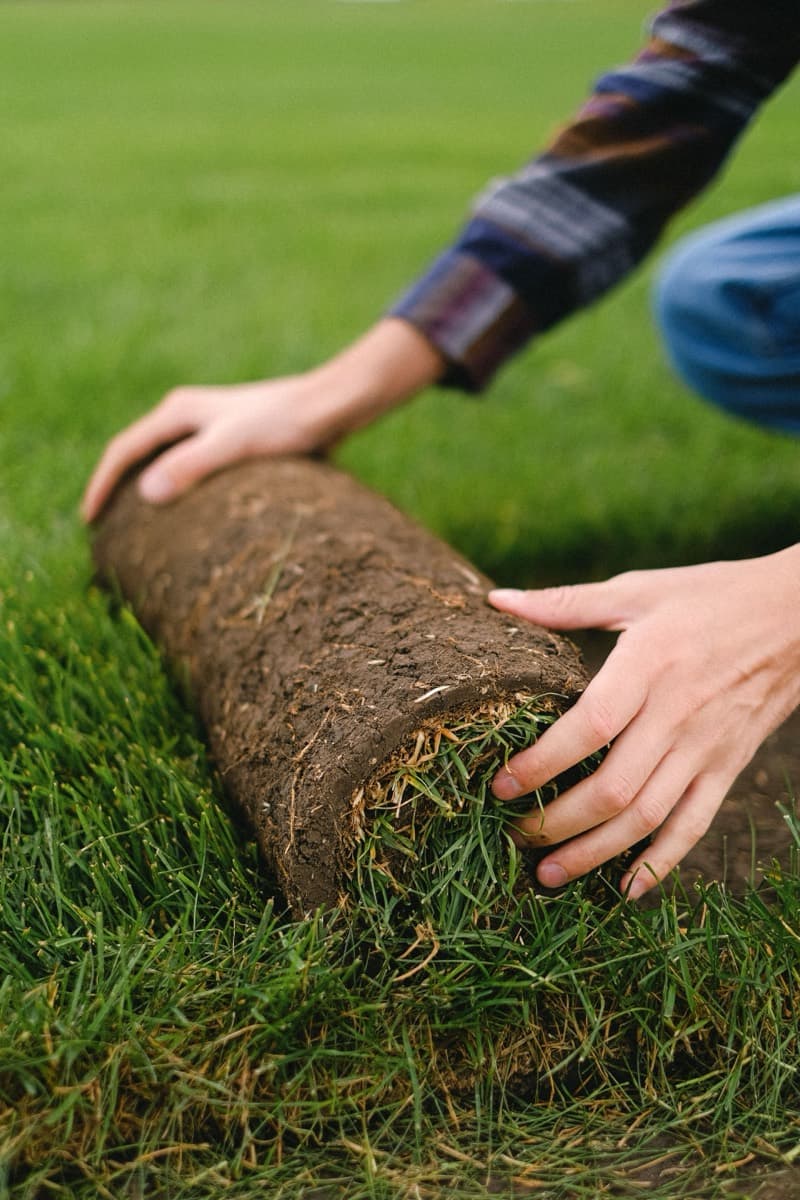
If you're planning new sod, a patio or a deck, drainage comes first. Laying a lawn over a drainage problem means tearing it up to fix the water later — and a lawn sitting in water through spring thaw won't survive to make that decision for you.
It's usually more efficient to solve the water and do the surface work in the same visit than to come back and redo it.
Getting it looked at
We handle grading, swales, French drains and catch basins across Fergus, Elora, Centre Wellington and Guelph. If your yard holds water, the useful first step is having someone walk it with you and tell you which of the fixes above your site actually needs.
Autumn books up quickly for this work, precisely because it's the last window before the ground closes.