Why fall is the best time to install sod in Ontario
Cool air, warm soil, and steady rain make September through November the strongest sodding window of the year — and the reasons are worth understanding before you book.
Most people book sod in May. It feels like the natural time — the yard is bare, the weather has turned, and a new lawn is on the to-do list. But if you asked us to pick the single best stretch of the year to lay sod in Southern Ontario, we'd pick early fall almost every time.
The reason comes down to a combination the rest of the year doesn't offer: cool air above the ground and warm soil below it.
Warm soil, cool air — the combination that matters
Grass roots grow based on soil temperature, not air temperature. By September the ground has absorbed a whole summer of heat and is still warm well into October. That warm soil drives fast root growth.
At the same time the air has cooled. That matters because heat is what stresses new sod — it drives evaporation, dries the seams, and forces the plant to spend energy staying alive rather than rooting in.
In spring you get the opposite problem: the air warms up before the soil does. New sod is asked to grow in cold ground while the sun is already pulling moisture out of it. It works, but it's harder on the lawn and less forgiving of a missed watering.
The practical advantages
- Autumn rain does much of the watering for you — the single biggest cause of new-sod failure is under-watering, and fall stacks the odds in your favour.
- Fewer weeds. Most annual weeds have finished their cycle, so new sod isn't competing for space and light.
- Less foot traffic. Kids, pets and parties have wound down, giving the lawn a quiet stretch to knit in.
- A finished lawn in April, not a construction site. Fall sod comes out of winter established and ready to use.
- Shorter lead times. Contractor schedules loosen after the summer rush.
What happens under the sod, week by week
It helps to know what you're actually waiting for. Sod arrives as a living mat with its roots cut short — the farm severs them on harvest. Everything that follows is the lawn rebuilding a root system into your soil.
- Week 1–2: fine white roots push out of the mat and into the prepared soil. This is the fragile stage — the lawn cannot pull water up yet, so it depends entirely on what you put down. Keep it wet.
- Week 3–4: the seams start knitting. Tug a corner gently; if it resists, it has taken. You can begin easing the watering back.
- Week 5–8: roots reach deeper soil and the lawn stops needing help. First mow happens in here, once it is anchored enough that the mower won't shift it.
- Through the freeze: root growth continues in soil above roughly 5°C, long after the top has stopped growing. This is the part spring sod never gets — and it is the whole argument for fall.
Fall sod or fall seed?
Early fall is also the best seeding window of the year, so it is a fair question. The honest answer is that they solve different problems.
Seed is the better value on a lawn that is largely intact and just thin — overseeding into existing turf, usually alongside aeration. It costs a fraction of sod and, given the same fall conditions, fills in well.
Sod is the answer when there is no lawn to save: a new build, a yard torn up by construction, heavy shade damage, or a grade that had to be rebuilt. It also wins whenever you need the yard usable quickly, since seed needs a full season before it takes real traffic.
On the same property we often do both — sod the visible front, seed the back. There is no rule that says a yard gets one treatment.
Late summer heat is the one thing to plan around
Early September can still deliver a stretch of 28°C days. Sod laid into that needs the full summer watering schedule until the weather genuinely turns — don't ease off just because the calendar says fall.
Once night-time temperatures settle into single digits, watering demand drops sharply and the lawn largely takes care of itself.
What still has to be right
Timing helps, but it doesn't rescue a bad installation. The things that determine whether a lawn lasts are the same in every season: the grade has to move water away from the house, the soil has to be prepared so roots have something to knit into, and the seams have to be tight so they don't dry out and open up.
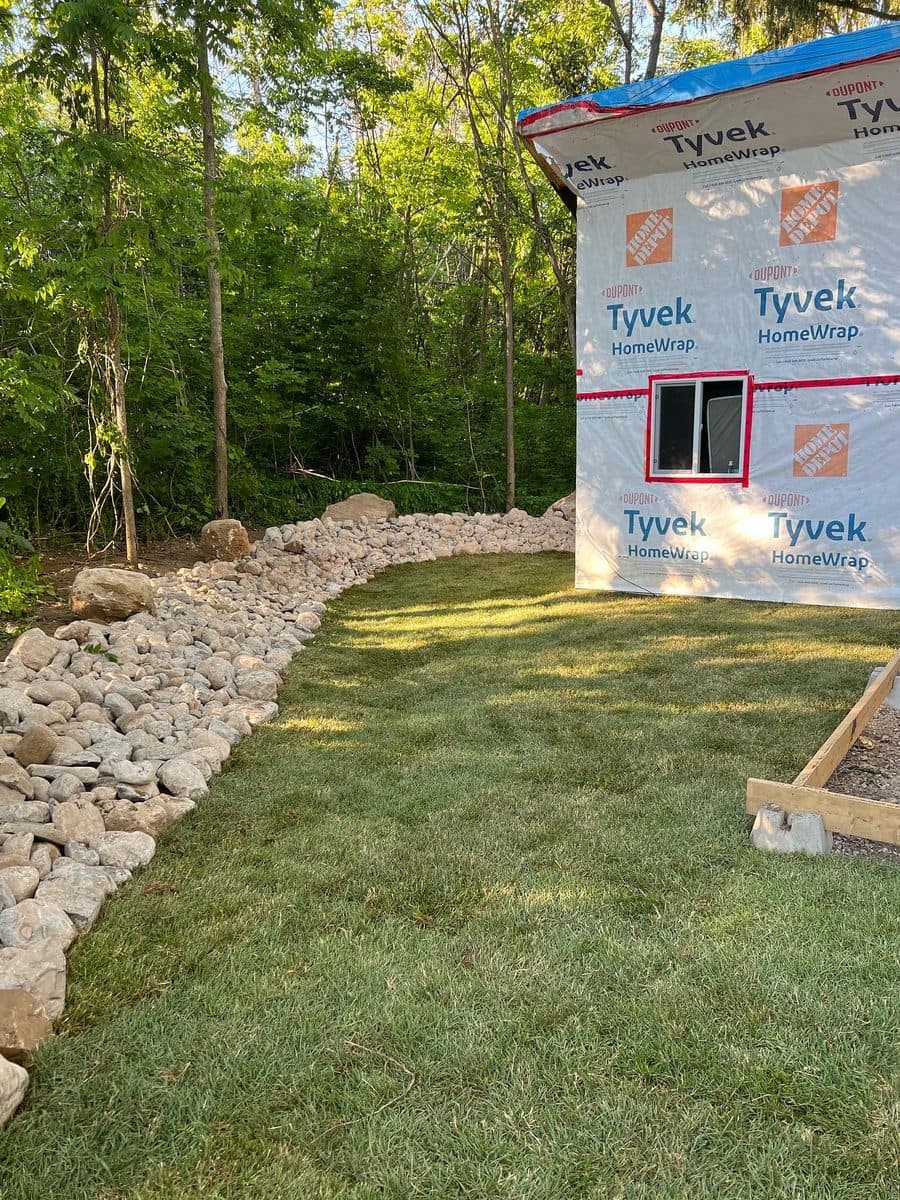
If your yard has a drainage problem, fall is the right time to fix that too — before the freeze-thaw cycle makes it worse. It's often more efficient to solve the water and lay the lawn in the same visit.
 BeforeAfter
Booking the window
The strong window in Centre Wellington runs from early September through October, and installation is possible well past that — sod goes down until the ground freezes or the farms stop cutting.
We install sod across Fergus, Elora and Centre Wellington, and out into Guelph, Kitchener, Cambridge and Milton — each of which brings its own ground to deal with, from south-end Guelph clay to the shallow bedrock and narrow lot access common in Milton.
If you're weighing fall against waiting for spring, we're happy to walk the yard and give you an honest read on which makes more sense for your site. There is no charge for the visit and no obligation.