When is the best time to lay sod in Centre Wellington?
A month-by-month look at sod season in Centre Wellington — which windows work, which ones fight you, and why the ground matters more than the calendar.
Sod can go down any time the ground isn't frozen, but the results aren't equal across the season. Some windows let a lawn root in fast with almost no help from you. Others mean watering twice a day for three weeks and still losing seams.
Here's how the season actually breaks down in Centre Wellington, and the local conditions that matter more than the month.
The season, month by month
Rough guidance for Fergus, Elora and the surrounding townships. Every year shifts by a week or two.
- April — usable once the ground has thawed and dried enough to grade. Early April is often still too wet to get equipment on without leaving ruts.
- May to early June — a strong window. Cool air, a full season ahead, and rain that does much of the watering.
- Late June through August — workable but demanding. Heat drives evaporation and dries the seams, so the watering has to be relentless. We install in this window regularly; it just needs commitment.
- September to mid-October — the strongest window of the year. Warm soil, cool air, autumn rain, and almost no weed competition.
- Late October into November — still very much possible. Rooting slows and the lawn may go dormant before it's fully knitted in, which is normal.
- Once the ground freezes — done for the year, unless a mild stretch reopens it.
Why fall usually beats spring
If we had to pick one window, it'd be early fall — and the reason is a combination the rest of the year doesn't offer.
Grass roots respond to soil temperature, not air temperature. By September the ground has banked a whole summer of heat and stays warm well into October, driving fast root growth. Meanwhile the air has cooled, so the sod isn't fighting evaporation.
Spring gives you the reverse: the air warms before the soil does, so new sod is asked to root in cold ground while the sun is already pulling moisture out of it. It works — most lawns go down in spring — but it's less forgiving of a missed watering.
What Centre Wellington ground does that changes the answer
Generic sod advice is written for nowhere in particular. A few things about working around Fergus and Elora shift the calculation.
- Clay-heavy soil is common here. It holds water, which helps in summer but means spring installs often wait an extra week or two for the ground to dry enough to grade properly.
- Shallow bedrock shows up on plenty of properties in the township. Where topsoil is thin, a new lawn needs soil brought in rather than just sod laid over what's there — and that's a bigger job than most people budget for.
- New-build lots are usually compacted by construction traffic. Sod laid straight onto compacted subsoil roots badly no matter how good the timing is.
- Rural and open properties dry out faster in wind than sheltered town lots, which changes the watering demand more than the month does.
Preparation beats timing, every time
This is the part worth taking away. A lawn laid in the perfect week over a poor base will lose to a lawn laid in an awkward week over a properly prepared one.
What actually determines whether a lawn lasts is the grade moving water away from the house, enough good soil for roots to knit into, tight seams that don't dry out and open up, and consistent watering in the first month. Get those right and the month becomes a detail.
Get them wrong and no amount of ideal timing rescues it.
Fix the water before you lay the lawn
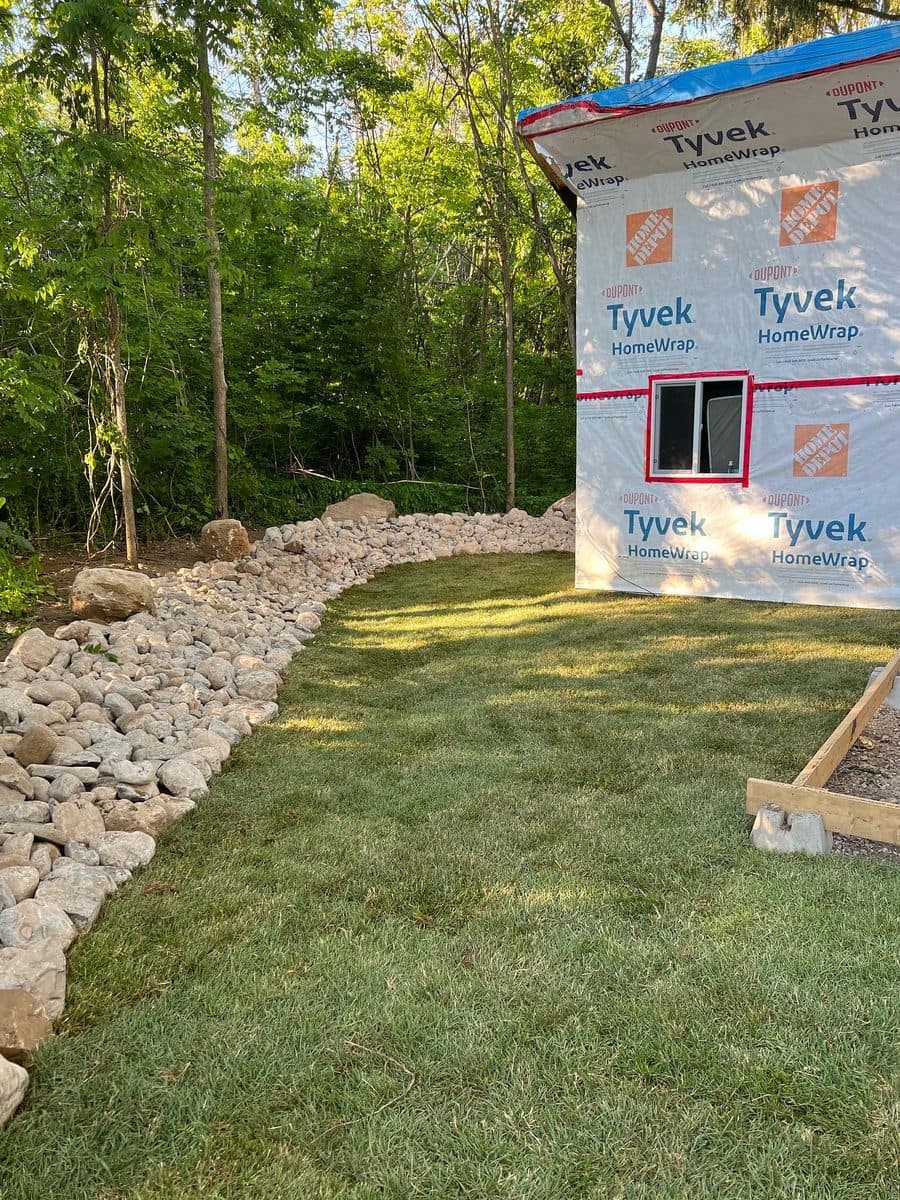
If your yard holds water after rain, sort that out first. Sod laid over a drainage problem sits wet through the spring thaw and dies in patches, and then you're tearing up a new lawn to fix what should have been done underneath it.
It's usually faster and cheaper to solve the drainage and lay the sod in the same visit than to come back and redo it.
The practical advice
Book earlier than you think you need to. The good windows fill first, and the difference between landing in late September and landing in late October is often just how far ahead you called.
If you're deciding between fall now and spring next year, fall generally wins — you get an established lawn in April instead of a construction site.
We install sod across Fergus, Elora, Centre Wellington and Guelph, and we'll give you an honest read on whether your site is ready or whether something underneath needs sorting first.