Wood vs. vinyl fencing: what holds up best in Southern Ontario?
Both are solid choices for privacy and property lines — but they age very differently once winter gets involved. Here's how to think about the trade-off.
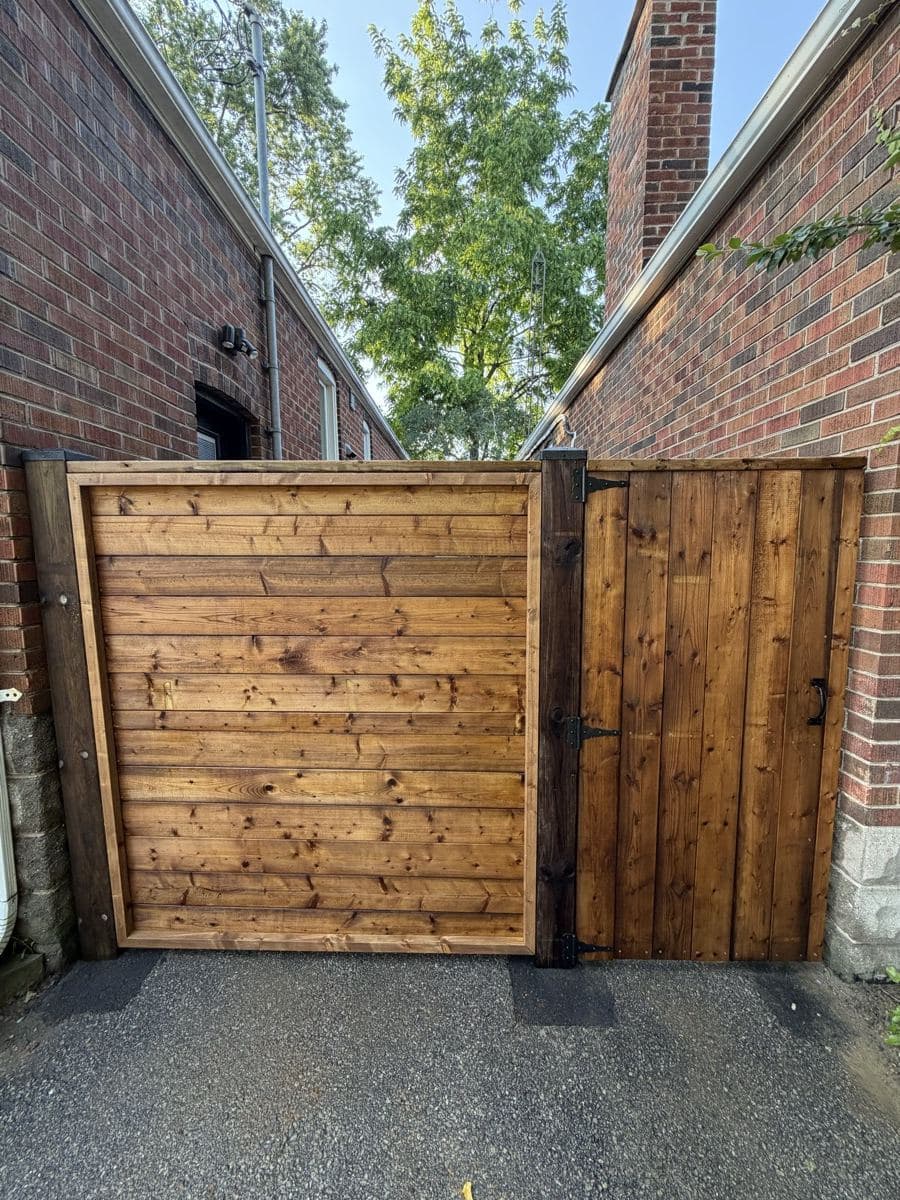
Wood and vinyl are the two most common fencing choices we install, and both can look great for a long time — the right pick depends more on how much upkeep you want than which one is "better."
Upfront cost vs. long-term maintenance
Wood typically costs less upfront but asks more of you over time — a wash and a stain or seal every couple of years to keep it from greying and to protect against moisture. Vinyl costs more initially but is essentially maintenance-free after installation: no staining, no sealing, just an occasional hose-down.
How they handle Ontario winters
Both hold up well when installed properly, but they fail differently. Wood is vulnerable to rot at ground contact points and can warp or splinter if left unfinished too long. Vinyl doesn't rot, but it can crack on impact in extreme cold — a branch or a hard bump in January is more likely to chip vinyl than dent wood.
Repairs
A damaged wood picket or rail is usually a simple, inexpensive swap. Vinyl repairs are less common but can mean replacing a full panel if a section cracks, since matching an exact colour and profile years later isn't always straightforward.
Our take
If you don't mind a bit of seasonal upkeep and like the natural look, wood is a great, cost-effective choice. If you want to install it and largely forget about it, vinyl earns back its higher upfront cost over the years. Either way, the posts and footings underneath are what actually determine how straight and solid the fence stays — that's where we focus regardless of the material on top.